
Introduction
When businesses plan their digital advertising strategy, one question consistently arises: Google Ads vs Meta Ads—which platform delivers better results in 2026?
The answer depends on your business goals, target audience, budget, industry, and customer journey. Both advertising platforms continue to dominate the digital marketing landscape, but they serve different purposes.
Google Ads captures users actively searching for products and services, while Meta Ads helps businesses create demand through highly targeted social media advertising on Facebook, Instagram, Messenger, and Audience Network.
For companies seeking sustainable growth, understanding the strengths and limitations of both platforms is essential. In this comprehensive guide, we'll compare Google Ads vs Meta Ads 2026 across targeting, costs, lead quality, conversions, ROI, and business suitability to help you make the right decision.
Table of Contents
- Understanding Google Ads
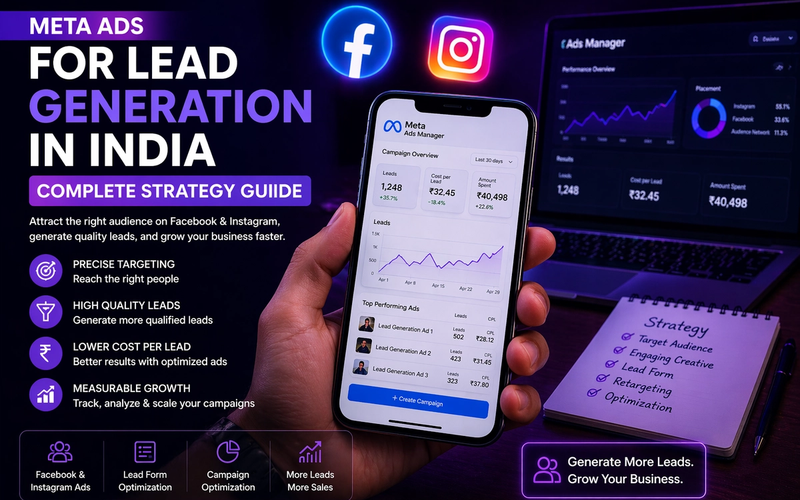
- Understanding Meta Ads
- Google Ads vs Meta Ads: Key Differences
- Audience Targeting Comparison
- Cost Comparison in 2026
- Lead Generation Comparison
- E-commerce Performance Comparison
- Brand Awareness Comparison
- Which Businesses Should Use Google Ads?
- Which Businesses Should Use Meta Ads?
- Google Ads vs Meta Ads: Which Delivers Better ROI?
- How PromoDaddy Digital Helps Businesses Scale with Paid Advertising
- Conclusion
Understanding Google Ads
Quick Answer:
Google Ads helps businesses reach users who are actively searching for products or services.
Google Ads operates across Search, Display, YouTube, Shopping, Discover, and Performance Max campaigns. The platform is intent-driven, meaning users already have a need when they perform a search.
For example:
- "Best dentist near me"
- "Buy running shoes online"
- "Digital marketing agency in India"
These searches indicate immediate interest and often strong purchase intent.
Key Benefits of Google Ads
- High-intent traffic
- Faster lead generation
- Excellent for local businesses
- Strong conversion rates
- Advanced AI bidding strategies
- Detailed conversion tracking through Google Analytics
Businesses looking for Google Ads management in India often choose Google Ads because it consistently generates qualified leads from users actively seeking solutions.
Understanding Meta Ads
Quick Answer:
Meta Ads helps businesses reach targeted audiences based on interests, behavior, demographics, and engagement patterns.
Meta Business powers advertising across:
- Messenger
- Audience Network
Unlike Google Ads, Meta focuses on discovery rather than search intent.
Users may not be actively looking for your product when they see your ad. Instead, Meta's algorithm identifies people likely to be interested based on behavior and interests.
Key Benefits of Meta Ads
- Advanced audience segmentation
- Strong visual storytelling
- Lower CPC in many industries
- Excellent brand awareness
- Effective remarketing capabilities
- Ideal for impulse purchases
Businesses often work with a Meta Ads Agency India to leverage Meta's sophisticated audience targeting and creative advertising opportunities.
Google Ads vs Meta Ads: Key Differences
Quick Answer:
Google Ads captures demand, while Meta Ads creates demand.
| Factor | Google Ads | Meta Ads |
| User Intent | High | Medium |
| Platform Type | Search-Based | Social-Based |
| Lead Quality | Higher | Moderate to High |
| CPC | Usually Higher | Usually Lower |
| Brand Awareness | Good | Excellent |
| Conversion Intent | Strong | Moderate |
| Audience Discovery | Limited | Excellent |
| Retargeting | Strong | Very Strong |
| Best for | Leads & Sales | Awareness & Engagement |
The biggest distinction in the Google Ads vs Meta Ads debate is intent.
Google users search because they need something.
Meta users scroll for entertainment and discover products along the way.
Audience Targeting Comparison
Quick Answer:
Meta Ads offers stronger audience targeting, while Google Ads excels in keyword targeting.
Google Ads Targeting
Google allows advertisers to target:
- Keywords
- Search intent
- Geographic location
- Device type
- Demographics
- In-market audiences
Meta Ads Targeting
Meta allows targeting based on:
- Interests
- Behaviors
- Purchase habits
- Demographics
- Lookalike audiences
- Website visitors
- Social engagement
Which Is Better?
If your customers already know what they need, Google wins.
If you need to introduce your brand to new audiences, Meta wins.
Cost Comparison in 2026
Quick Answer:
Meta Ads generally offers lower CPC, while Google Ads often provides higher conversion intent.
Average Cost Trends in 2026
| Metric | Google Ads | Meta Ads |
| Average CPC | Higher | Lower |
| Average CPM | Moderate | Lower |
| Lead Cost | Industry Dependent | Industry Dependent |
| Conversion | Often Lower for High Intent | Lower for Awareness |
| Cost | Searches | Campaigns |
Example
A law firm may pay:
- Google Ads: $10–$50 CPC
- Meta Ads: $1–$5 CPC
However, Google traffic may convert at significantly higher rates because users are actively seeking legal services.
The true metric is not CPC—it is cost per acquisition (CPA).
Lead Generation Comparison
Quick Answer:
Google Ads usually delivers higher-quality leads, while Meta Ads can generate leads at scale.
Google Ads Lead Generation
Ideal for:
- Real estate
- Healthcare
- Education
- Professional services
- Local businesses
Users searching for solutions are more likely to convert.
Meta Ads Lead Generation
Ideal for:
- Coaching
- Fitness
- Events
- Consumer services
- Lifestyle brands
Meta Lead Forms simplify the lead capture process and often reduce friction.
Winner
For lead quality:Google Ads
For lead volume:Meta Ads
E-commerce Performance Comparison
Quick Answer:
The best-performing e-commerce brands typically use both platforms.
Google Ads Strengths
- Shopping campaigns
- Performance Max
- High purchase intent
- Product listing ads
Meta Ads Strengths
- Product discovery
- Dynamic retargeting
- Visual product showcases
- Social proof
Real-World Scenario
A fashion store may:
- Use Meta Ads to introduce products.
- Use Google Ads to capture ready-to-buy customers.
This combination often creates the strongest customer acquisition strategy.
Brand Awareness Comparison
Quick Answer:
Meta Ads is usually the better choice for brand awareness campaigns.
Meta's visual environment allows businesses to:
- Tell stories
- Showcase products
- Build emotional connections
- Generate engagement
Google Display and YouTube campaigns can also build awareness, but Meta's social ecosystem remains particularly effective for brand-building initiatives.
Winner
Meta Ads
Which Businesses Should Use Google Ads?
Best Industries for Google Ads
- Healthcare
- Legal services
- Education
- Home services
- SaaS companies
- B2B businesses
- Financial services
Use Google Ads If:
- Customers actively search for your services.
- You need qualified leads quickly.
- You want measurable conversions.
- You operate in a competitive local market.
Businesses seeking Google Ads services in India often prioritize lead generation and direct response marketing.
Which Businesses Should Use Meta Ads?
Best Industries for Meta Ads
- Fashion
- Beauty
- Fitness
- Restaurants
- E-commerce
- Events
- Personal brands
Use Meta Ads If:
- Visual content drives sales.
- You want to build brand awareness.
- Your audience spends time on social media.
- You need cost-effective audience expansion.
Many businesses partner with providers offering Meta Ads services in India to build scalable customer acquisition funnels.
Google Ads vs Meta Ads: Which Delivers Better ROI?
Quick Answer:
ROI depends on business goals, but Google Ads often delivers stronger short-term ROI, while Meta Ads supports long-term growth.
Google Ads ROI
Best for:
- Immediate conversions
- Local lead generation
- Service-based businesses
- High-intent purchases
Meta Ads ROI
Best for:
- Audience growth
- Brand awareness
- Product discovery
- Retargeting
The Smartest Strategy in 2026
Most successful businesses do not choose between Google Ads or Meta Ads.
They use both.
Google captures demand.
Meta creates demand.
Together, they create a complete customer acquisition system.
How PromoDaddy Digital Helps Businesses Scale with Paid Advertising
At PromoDaddy Digital, we help businesses build data-driven advertising campaigns that focus on profitability rather than vanity metrics.
Our approach includes:
- Search advertising strategy
- Meta advertising management
- Conversion tracking setup
- Landing page optimization
- Performance reporting
- Funnel optimization
- Audience segmentation
- ROI-focused campaign management
Whether you need Google Ads management in India, Google Ads services in India, Meta Ads services in India, or a trusted Meta Ads Agency India, our team focuses on generating measurable business outcomes.
Conclusion
When evaluating Google Ads vs Meta Ads, there is no universal winner.
Google Ads excels at capturing high-intent customers ready to take action.
Meta Ads excels at building awareness, generating demand, and nurturing potential buyers.
For most businesses in 2026, the highest-performing strategy combines both platforms to guide customers from discovery to conversion.
If you're unsure whether Google Ads or Meta Ads is right for your business, working with experienced advertising specialists can help maximize your budget and improve campaign performance.
At PromoDaddy Digital, we help businesses create scalable advertising systems that drive leads, sales, and long-term growth through strategic paid marketing campaigns.
Frequently Asked Questions (FAQs)
1. Which is better in 2026: Google Ads or Meta Ads?
There is no one-size-fits-all answer. In the Google Ads vs Meta Ads 2026 comparison, Google Ads is generally better for capturing high-intent users who are actively searching for products or services, while Meta Ads is ideal for building awareness, reaching new audiences, and generating demand through social media advertising.
2. Is Google Ads more expensive than Meta Ads?
In most industries, Google Ads has a higher average cost-per-click (CPC) because users are actively searching with strong purchase intent. Meta Ads often offers lower CPCs, but campaign success should be measured by lead quality, conversion rate, and overall return on investment rather than click costs alone.
3. Which platform generates better leads for service-based businesses?
Google Ads typically generates higher-quality leads for industries such as healthcare, legal services, education, and home services because users are actively searching for solutions. Businesses looking for Google Ads services in India often prioritize Google Ads for lead generation and direct conversions.
4. Are Meta Ads effective for e-commerce businesses?
Yes. Meta Ads is highly effective for e-commerce brands because it helps businesses showcase products visually, reach targeted audiences, and retarget website visitors. Many online stores use Meta Ads to drive product discovery and customer engagement before purchase.
5. Should I run Google Ads and Meta Ads together?
For most businesses, combining both platforms delivers the best results. Google Ads captures existing demand, while Meta Ads creates demand and nurtures potential customers. Using both platforms together often improves overall marketing performance and customer acquisition efficiency.
6. How much budget should I allocate to Google Ads and Meta Ads?
Budget allocation depends on your industry, goals, and customer journey. Businesses focused on immediate lead generation often invest more heavily in Google Ads, while brands focused on awareness and audience growth may dedicate a larger share to Meta campaigns. A balanced testing approach usually produces the best long-term results.
7. How can businesses improve advertising ROI on both platforms?
Improving ROI requires accurate audience targeting, compelling ad creatives, conversion tracking, landing page optimization, and continuous campaign testing. Businesses working with providers offering Meta Ads services in India and Google advertising expertise often achieve better performance through strategic campaign management.
8. Why choose PromoDaddy Digital for paid advertising management?
PromoDaddy Digital helps businesses create data-driven advertising campaigns focused on leads, sales, and measurable growth. From audience research and campaign setup to optimization and reporting, the goal is to maximize return on ad spend while building sustainable long-term business growth.